Steve Dahl and Disco Demolition Night (1979)
On July 12, 1979, a radio promotion at Comiskey Park turned into one of the wildest nights in baseball history. What happened, why the White Sox forfeited, and how people look back on it now.
On July 12, 1979, the White Sox were having a forgettable season. The team was hosting the Detroit Tigers for a doubleheader at Comiskey Park, and the front office expected a modest crowd. Instead, a radio DJ's promotion packed the park, blew up a crate of records in center field, and ended with fans on the field and the White Sox forfeiting the second game. It's still one of the most talked-about nights in Chicago history.
The setup
Steve Dahl was a young rock DJ who had lost his job when his station switched to a disco format. He landed at WLUP, "The Loop," and turned his anti-disco bit into a running joke with his listeners.
The White Sox, run by famously promotion-happy owner Bill Veeck and his son Mike Veeck, teamed up with Dahl for a deal: bring a disco record to the ballpark and get in for 98 cents (the Loop was 97.9 FM). Between games of the doubleheader, Dahl would blow up the records.
The crowd
The Sox hoped for maybe 20,000 people. About 50,000 showed up, more than the park was meant to hold, and thousands more gathered outside. People climbed walls and snuck in. Records that hadn't been collected started flying out of the stands like Frisbees during the first game.
The explosion
After the Tigers won the first game, Dahl, in an Army helmet, rode out to center field and set off a charge under a crate full of records. It blew a hole in the outfield.
Then thousands of fans poured onto the field. They tore up the grass, lit fires, pulled down the batting cage, and wouldn't leave. Bill Veeck and announcer Harry Caray pleaded over the PA system for people to go back to their seats. Eventually police in riot gear cleared the field. Dozens of people were arrested.
The forfeit
The field was too damaged to play. The American League ruled that the White Sox had to forfeit the second game to the Tigers, one of the last forfeits in Major League history.
How people see it now
For years, Disco Demolition was remembered mostly as a crazy stunt gone wrong. Over time, more people have pointed out who disco belonged to: Black, Latino and gay audiences and artists. Some who were there, including a young Black usher who later became a house music pioneer, have said many of the records being thrown on the field weren't disco at all, just records by Black artists. Others say it was simply rock fans having fun and things got out of hand.
Both views come up every time the anniversary rolls around. Dahl has said it was never meant to be anything more than a joke.
What isn't in dispute: disco's popularity faded fast after 1979, and Chicago's own house music scene grew out of the same clubs a few years later.
The ballpark
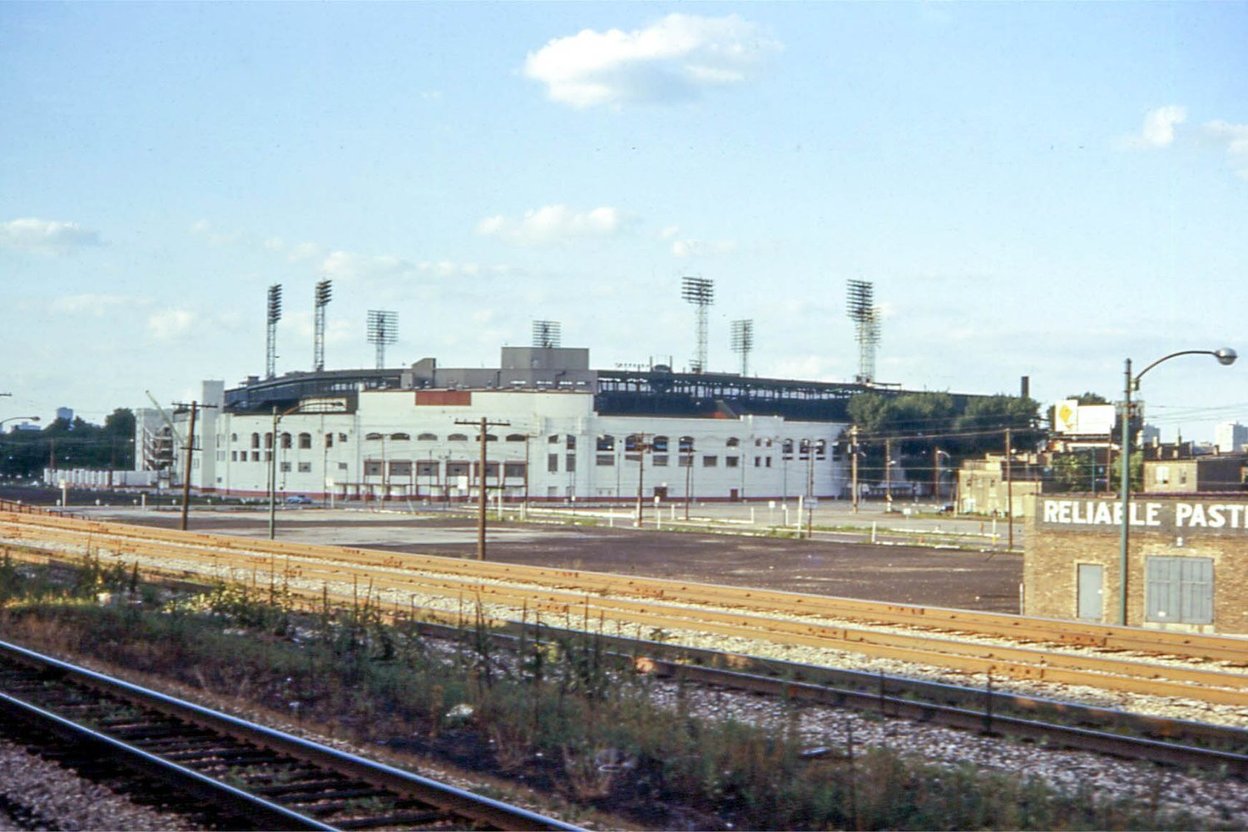
Old Comiskey Park, opened in 1910, hosted the White Sox until 1990. The new park was built just south of it, and today the old park's home plate is marked in the parking lot.
Sources (3)
Chicago History Museum: Disco Demolition Night; NPR: "The Night Disco Died, Or Didn't"; Britannica: Disco Demolition Night.
Photo: 19680728 10 Comiskey Park (5935027107).jpg) by David Wilson from Oak Park, Illinois, USA, CC BY 2.0.